Why Happy Customers in Oman Don't Leave Reviews — and the AI Workflow That Fixes It
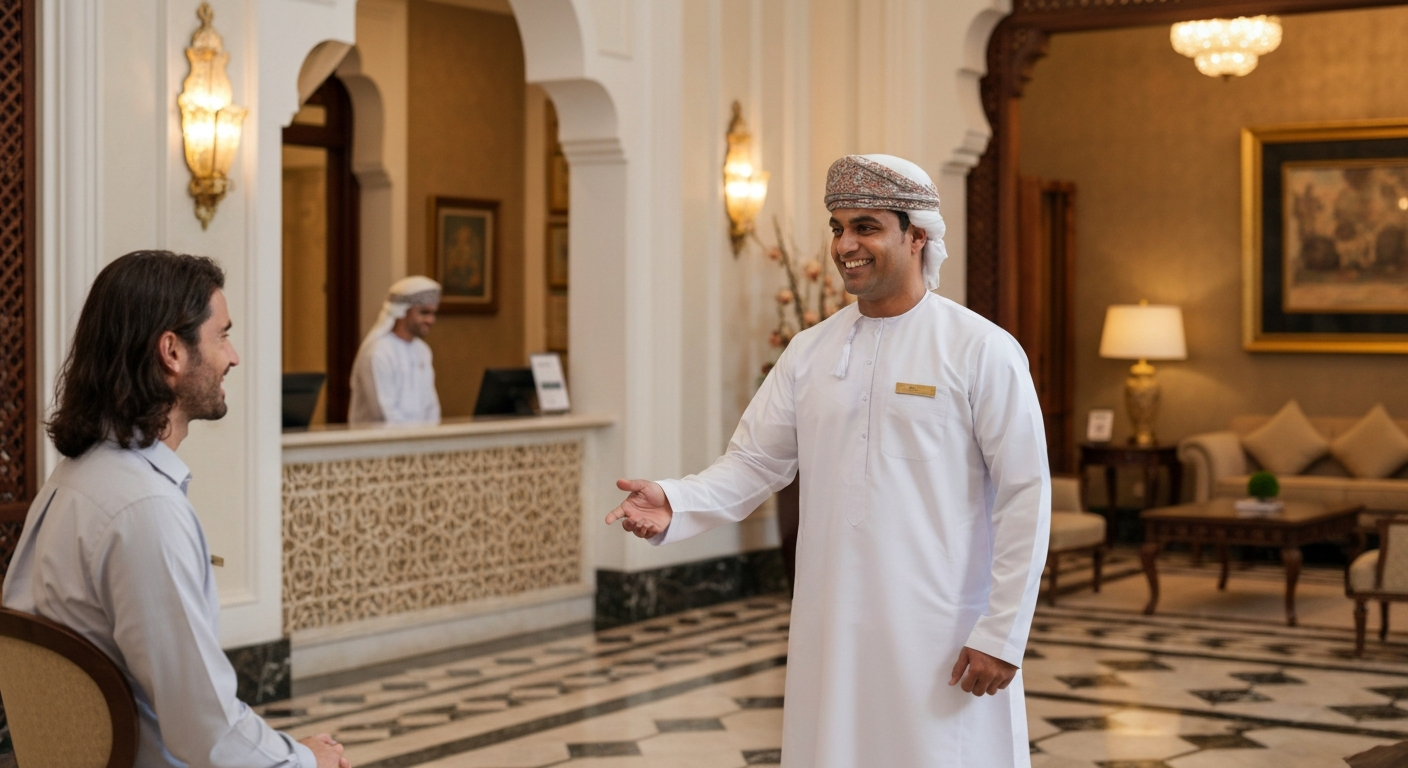
A family finishes dinner at a restaurant in Qurum. The food was excellent. They leave full, smiling, telling each other they'll definitely come back. One of them pulls out their phone on the way to the car and opens Instagram.
They don't open Google Maps.
Three days later, they've forgotten the exact name of the restaurant. Your Google rating sits at 4.1 — accurate, but incomplete — while a newer competitor with a structured review process sits at 4.7.
You didn't give worse service. You didn't have a system.
Why Satisfied Customers Don't Leave Reviews
This is a behaviour gap, not a loyalty gap.
Research consistently shows that customers who had a bad experience are significantly more motivated to leave a review than customers who had a great one. Negative emotion creates urgency. Positive emotion creates intention — and intention without follow-through produces nothing.
There are six specific reasons why happy customers stay silent:
1. Friction
Leaving a Google review is a 6-step process: open Google Maps, search for the business, find the review button, authenticate, write something, submit. Most people abandon by step two.
2. Timing
The window of peak motivation closes within a few hours of the experience. By the time a customer reaches home, the sense of "I should leave a review" has been displaced by everything else in their day.
3. Diffusion of responsibility
When every customer is a potential reviewer, no one feels a strong individual obligation to act. "They already have plenty of reviews" is a common mental shortcut — even when the business needs more recent ones.
4. Not realising it matters
In Oman's relationship-oriented business culture, customers often assume you know the service was good because they came back, referred a friend, or said thank you in person. The connection between their Google review and your online visibility is not obvious to most people.
5. Overthinking the words
Writing feels like a task. People want to say something useful but don't know where to start. When in doubt, they say nothing.
6. Forgetting
The most common reason of all. They fully intended to leave a review. Then life continued.
What This Gap Actually Costs You
In Muscat and across the GCC, Google reviews drive three outcomes that directly affect revenue:
Local search visibility. Google's ranking algorithm for local businesses factors in both review volume and recency. A business receiving 2–3 new reviews per week consistently outranks a competitor with more total reviews but no recent activity. Freshness signals trust to both Google and new visitors.
First-visit decisions. Across GCC markets, the majority of first-time customers check Google before visiting a business they haven't tried. For clinics, salons, restaurants, car rental companies, and service providers, your review profile is often the final filter before someone books or walks in.
Corporate and visitor trust. Guests arriving from UAE, Saudi Arabia, or internationally — and corporate clients making procurement decisions — give significant weight to review scores and how businesses respond to feedback. A high response rate signals that someone is actively running this business and cares about the outcome.
The gap between 4.1 and 4.7 is not purely aesthetic. It determines whether your business is shortlisted or skipped.
The AI Workflow That Removes Every Barrier
The solution is not asking your team to remember to prompt customers. It is engineering the moment of peak motivation — automatically — and removing every step that causes people to abandon.
Here is how a structured review workflow operates:
Trigger: A customer completes a booking, appointment, checkout, or stay.
Step 1 — Timing window. The system waits an optimal interval — typically 30 to 90 minutes depending on business type — to reach the customer while the experience is still fresh. Not immediately after checkout. Not three days later.
Step 2 — A personal message, not a broadcast. A short, warm WhatsApp message arrives using the customer's name and referencing what they just experienced. It includes a single-tap link that opens the Google review form directly — no searching, no navigating, no account login required on their part.
Step 3 — Sentiment routing before anything goes public. Before directing anyone to Google, the message asks one simple question about their experience. Customers who signal a great visit are guided to the public review. Customers who indicate a concern are routed privately to the business owner or manager first. This gives the team a chance to address the issue directly — often converting what could have been a 1-star public review into a resolved situation and a returning customer.
Step 4 — One follow-up. If the customer didn't engage, a single message follows up 48 hours later. Not repeated prompting. Just one more opportunity during the extended motivation window.
Step 5 — AI-drafted replies. When reviews arrive, the system prepares a professional, context-aware reply for each one — positive or negative. The owner reviews and posts. No blank page. No guessing the right tone. Every review gets a response, which further signals to new visitors that this business is active and accountable.
What This Looks Like in Practice
A dental clinic in Muscat was generating 3 to 5 new Google reviews per month despite consistently strong patient feedback. The team was excellent, appointment satisfaction was high, and patients regularly returned — but the review flow was unpredictable.
After implementing a post-appointment review workflow, the clinic received over 20 new reviews in its first month. No change to clinical operations, no additional tasks for the front desk. The rating moved from 4.2 to 4.6. In the months following, the team noticed a meaningful increase in new enquiries from patients citing Google as how they found the clinic.
The difference was not the service. It was the infrastructure around the service.
The Gap Is Infrastructure, Not Effort
If your business in Oman is delivering great experiences but those experiences are not translating into public trust online, the problem is not your team and it is not your customers.
The gap is the absence of a system that works reliably at the right moment — one that removes friction, routes feedback intelligently, and ensures every satisfied customer has a clear, easy path to becoming a published advocate for your business.
That infrastructure is what FlowJuice builds into your existing customer journey — from the first booking to the review that helps your next customer find you.
FlowJuice Intelligence
The FlowJuice Intelligence team provides actionable insights, strategies, and industry trends to help businesses in Oman and the GCC automate their customer engagement and scale their operations effectively.